Affiliate Disclosure: This post may contain affiliate links. If you make a purchase through one of these links, I may earn a commission at no additional cost to you.
Power outages can happen unexpectedly because of severe weather, equipment problems, or other emergencies. Having a plan in place can make it easier to keep your household safe and comfortable until power is restored.
In this guide, we’ll cover practical ways to prepare for a power outage, what supplies to keep on hand, and an alternative-energy resource you may want to learn more about.
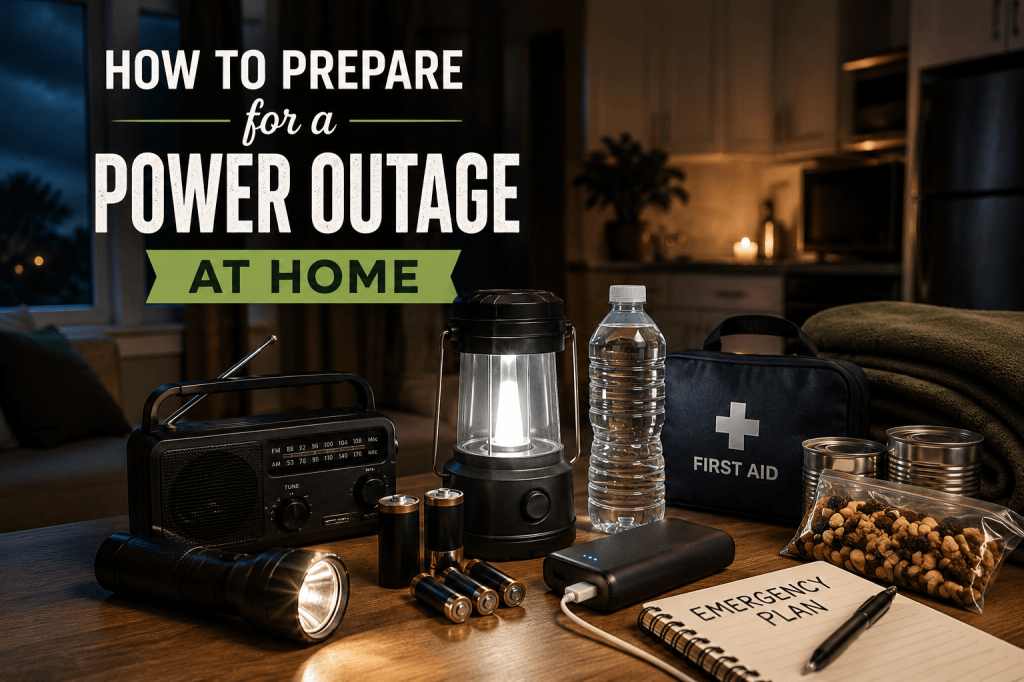
1. Build a Power Outage Emergency Kit
Start by keeping essential supplies together in an easy-to-reach location. A basic power outage kit can help you manage lighting, communication, food, water, and other needs until electricity is restored.
- Flashlights and extra batteries
- Battery-powered or hand-crank radio
- Portable phone chargers or power banks
- Bottled water
- Nonperishable food
- Manual can opener
- First-aid supplies
- Necessary medications
- Blankets and warm clothing
- Copies of important emergency contact information
2. Plan for Backup Lighting and Power
When the power goes out, having safe backup lighting and a way to charge essential devices can make a big difference. Keep flashlights in several easy-to-find locations and make sure you have extra batteries available.
Portable power banks can keep phones charged during shorter outages. For longer outages, some households may also consider a portable power station or another backup power source.
- Keep flashlights in bedrooms and common areas
- Charge power banks before severe weather
- Keep extra batteries on hand
- Avoid relying only on candles for lighting
- Consider a backup power source for longer outages
3. Protect Your Food During a Power Outage
During a power outage, keeping refrigerator and freezer doors closed can help food stay cold longer. Try to plan ahead so you don’t have to open them frequently to check food or get supplies.
- Keep refrigerator and freezer doors closed as much as possible
- Have coolers and ice packs available
- Keep shelf-stable foods that don’t require refrigeration
- Use a food thermometer to check food temperatures
- When in doubt about whether refrigerated food is safe, throw it away
Keeping a supply of easy-to-prepare, nonperishable foods can also make an extended outage easier to manage. Consider foods that require little or no cooking, especially if your normal cooking appliances depend on electricity.
4. Keep a Safe Water Supply
Power outages can sometimes affect water systems, especially during severe weather or other emergencies. Keeping an emergency supply of drinking water at home can help you stay prepared if your normal water supply becomes unavailable.
- Store bottled water in an easy-to-access location
- Keep enough water for drinking, cooking, and basic hygiene
- Check stored water regularly and replace it when necessary
- Consider keeping a water filtration method as a backup
- Fill clean containers with water when you know severe weather is approaching
Having both stored water and a backup way to filter or purify water can provide additional options during a longer emergency.
5. Consider Backup Power Options
A power outage can make it difficult to charge phones, use lights, keep important devices running, or handle everyday household needs. Having a backup power plan can help you prepare for both short-term and extended outages.
- Keep portable power banks charged
- Have extra batteries available
- Consider solar-powered charging options
- Keep flashlights and rechargeable lights ready
- Learn about alternative ways to generate backup electricity
For homeowners interested in learning more about alternative energy and emergency backup power, Home Power Shield provides information about a do-it-yourself approach to generating electricity at home.
Affiliate link: I may earn a commission if you purchase through this link, at no additional cost to you.
Important Note
Home Power Shield is an informational product that teaches an alternative approach to home power. Results can vary depending on your situation, equipment, setup, and other factors. Always follow proper safety precautions when working with electricity or electrical equipment.
6. Create a Family Power Outage Plan
A power outage can be less stressful when everyone in the household knows what to do. Create a simple plan ahead of time and make sure family members know where emergency supplies are stored.
- Choose a central location for emergency supplies
- Keep important phone numbers written down
- Decide how family members will communicate if cell service is limited
- Know where flashlights, batteries, and backup chargers are stored
- Make a plan for family members who may need extra assistance
- Keep pets and their supplies included in your emergency plan
Review your plan periodically and update your emergency supplies as your household’s needs change.
7. Stay Prepared Before the Power Goes Out
Power outages are unpredictable, but preparing ahead of time can make a big difference. Keeping emergency supplies, food, water, lighting, communication devices, and a family plan in place can help your household handle an outage more safely and comfortably.
Take a few minutes to review your emergency supplies today and identify anything you may still need. Even small preparations can make your household better equipped for an unexpected outage.
Want to Learn More About Backup Power?
If you’re interested in exploring an alternative approach to emergency backup power, you can learn more about the Home Power Shield system below.
Affiliate link: I may earn a commission if you purchase through this link, at no additional cost to you.


Leave a Reply